




Our current efforts are focused on:
- Redox reactions in wetlands

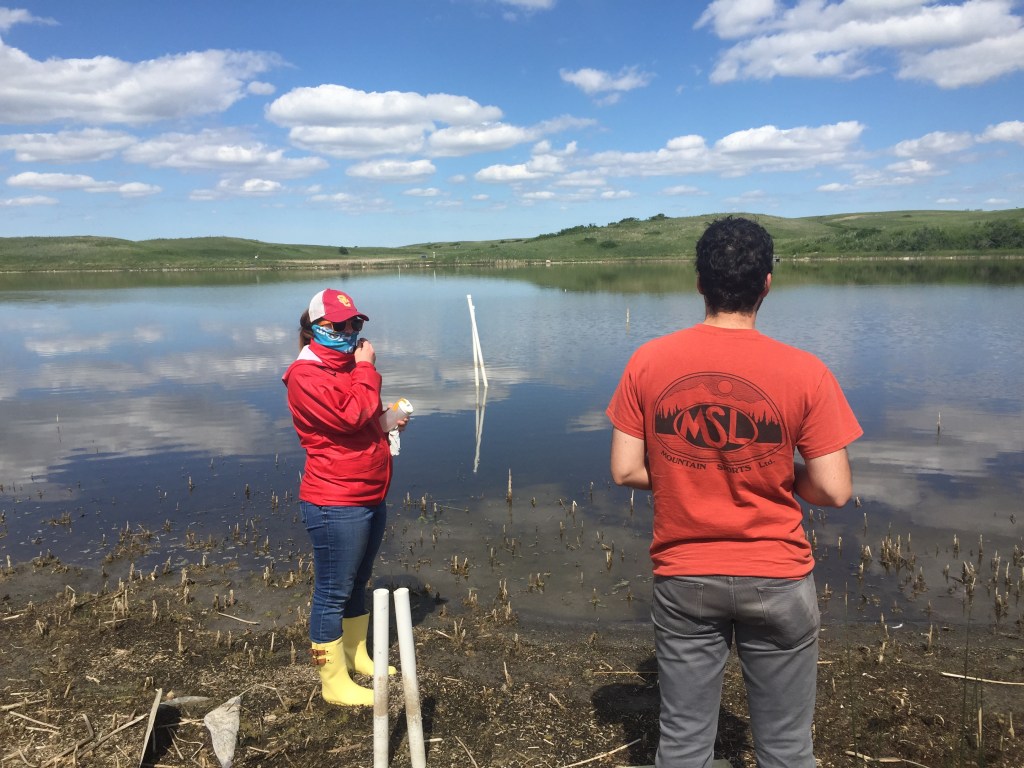
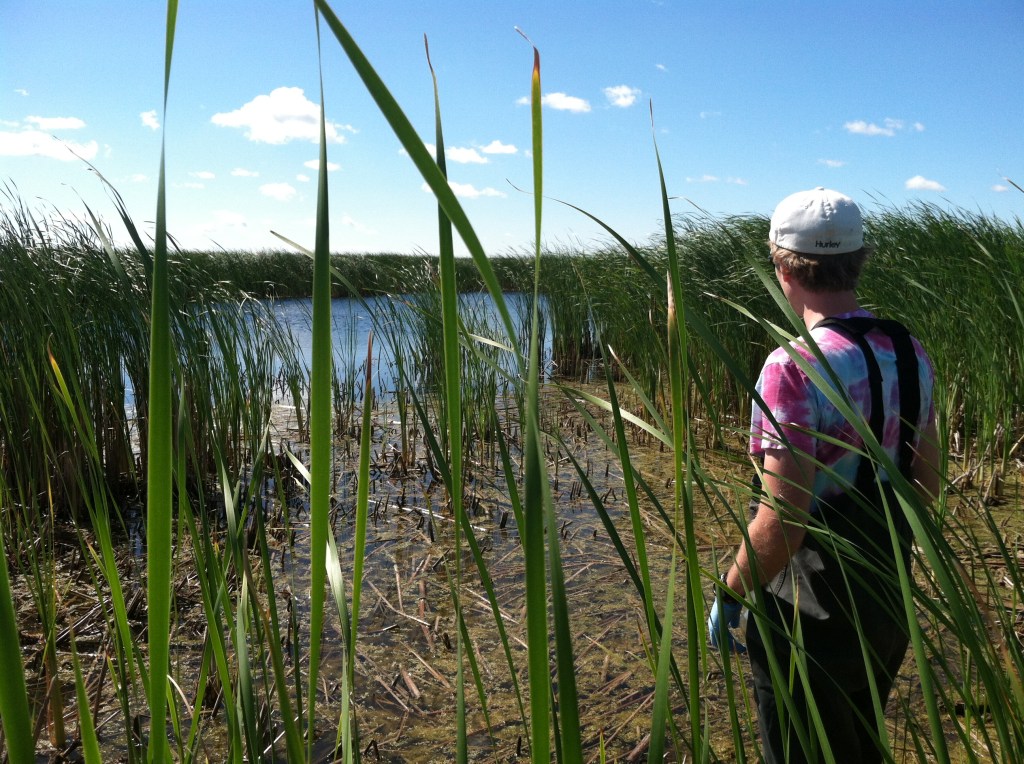
Prairie pothole lakes (PPLs also referred to as wetlands) are important hydrologic features in the glacial till of the Upper Midwest. The hydrology and climate of the region coupled with the composition of the till have developed water chemistries unique to PPLs, including extremely high (10’s to 100’s mM) levels of sulfate. The sediments are highly reducing, and contain sulfides and iron sulfide minerals. In collaboration with researchers from the University of Delaware and Colorado State University, we are evaluating the redox dynamics of the sediment/water interface, the production of hydroxyl radicals, and how the these chemical reactions drive the microbiological processes, specifically methanogenesis.
- Using 19F-NMR as a tool to quantify fluorinated compounds, track their degradation, and quantify PFAS
Fluorine is not only important in poly- and perfluoroalkyl substances (PFAS), but also in pharmaceuticals and pesticides. As these pollutants are transformed, we need to understand whether fluoride, or other fluorinated organic molecules are produced. We are using 19F-NMR as a tool to identify and quantify fluorinated breakdown products and to identify if specific functional groups are more or less susceptible to transformation. We are looking at photolysis, oxidation (e.g., chlorination), and biodegradation (collaboration with Sebastian Behrens) and using NMR and mass spectrometry to identify reaction products. For an example, see Bhat et al. (2024). This provides guidance as to which fluorinated functional groups are degradable to fluoride.
We are also exploring using NMR to quantify PFAS and other fluorinated chemicals in environmental samples. By using NMR, we can see all types of fluorinated compounds in a single analysis and assess how important different classes of fluorinated compounds and which functional groups are most prevalent. We are working with various partners to compare NMR results on samples analyzed by other methods. Faber et al. (2025) compares NMR and targeted LC-MS/MS.
Another aspect of this work is studying the oxidation of fluorinated model compounds to assess the formation of fluorinated byproducts and using computational chemistry tools to assess the reactivity of PFAS precursors with oxidants.
- Plastic and rubber derived chemicals in stormwater
Various chemicals are used to give plastic and rubbers their desired properties, and they can be released through wear of the product (e.g., tires) or exposure to light and water. Through these processes, these chemicals wind up in stormwater. Working with Andy Erickson and John Gulliver at the St. Anthony Falls Laboratory, we are investigating the utility of different filtration media for removing these compounds, as well as pesticides. Additionally, we are measuring the concentrations of these chemicals in stormwater ponds to assess other ways to protect receiving waters from these pollutants.
We are also investigating using earthworms to degrade PAHs in stormwater pond sediments!!
- Photochemistry of pharmaceuticals and pesticides in surface waters and engineered treatment systems
Wastewater, storm water, and agricultural runoff carry pesticides, pharmaceuticals, and nutrients. While these chemicals serve important functions in crop production or treatment of disease, they become pollutants when discharged into surface waters. When activated by sunlight, dissolved organic matter (DOM) generates photochemically produced reactive intermediates (PPRIs), including hydroxyl radical (.OH), singlet oxygen (1O2), carbonate radical (CO3.-), and triplet-excited state organic matter (3OM*). PPRIs, in turn, drive the indirect photolysis processes that are important in the transformation of anthropogenic contaminants. We are currently exploring the photolysis of fluorinated pharamaceuticals, pesticides, and quaternary ammonium compounds (QACs).


Quantitative NMR in environmental samples


- Sampling water and sediment to understand spatial and temporal trends of pollutants
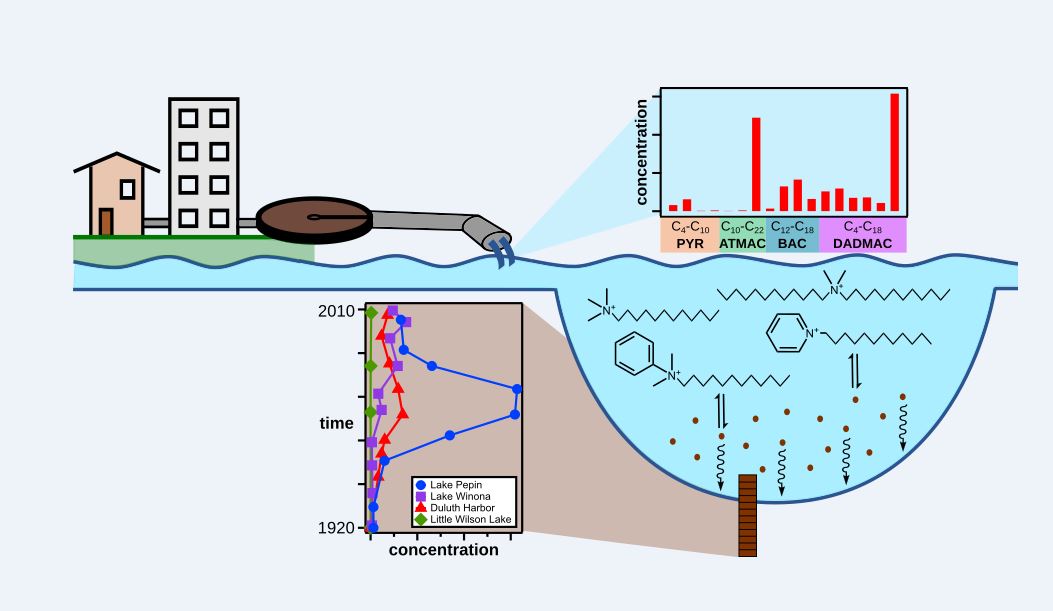
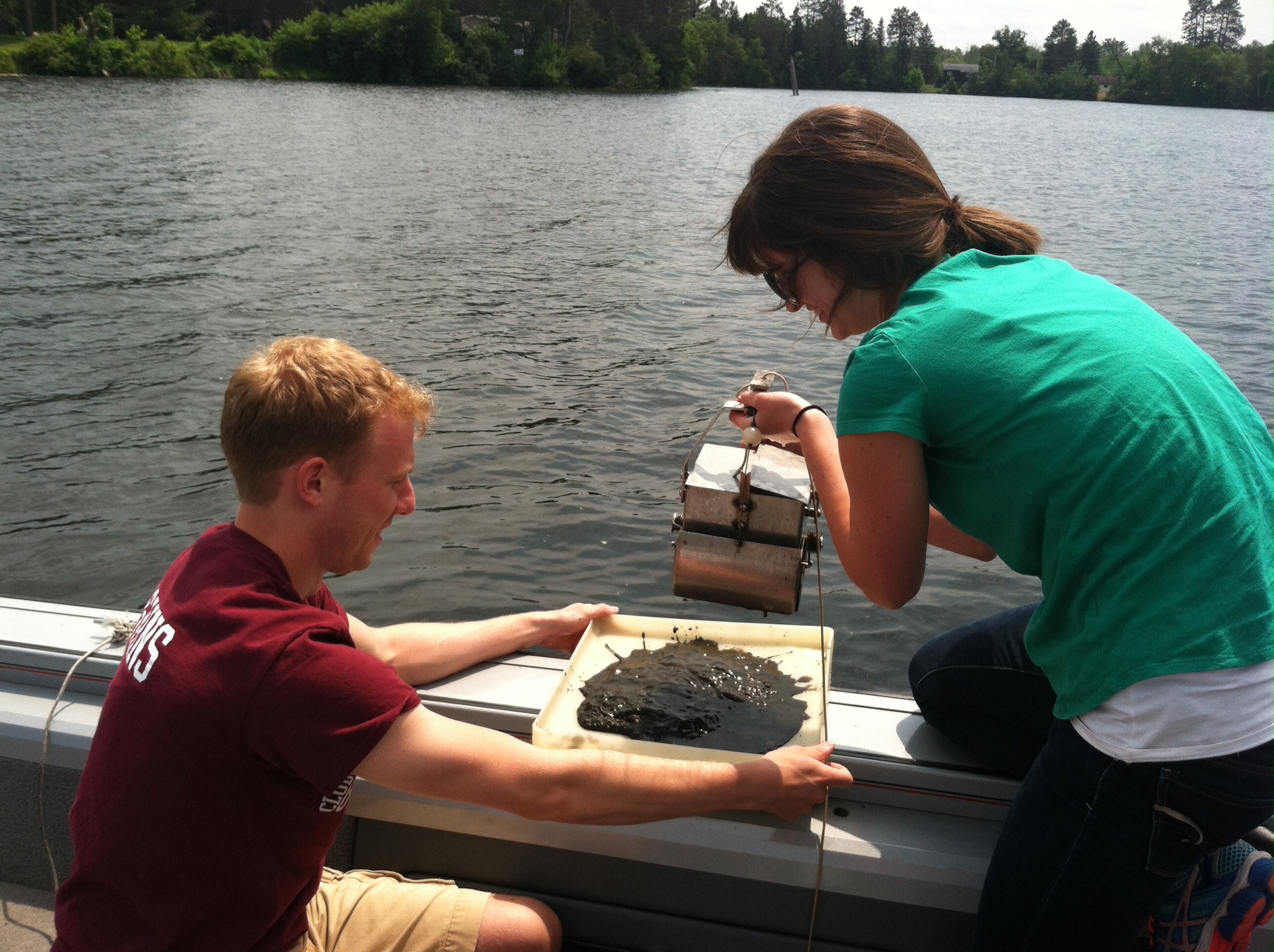
The COVID 19 pandemic has lead to a dramatic increase in the use of disinfectants, such as quaternary ammonium compounds. We are measuring QACs in wastewater, surface water, and sediment to understand how much is removed during treatment and the QAC levels in aquatic systems. We have also investigated the degradation of QACs via photolysis and biodegradation.
- Understanding the role of organic matter in indirect photolysis process
It is critical to understand PPRI production from, and quenching by, organic matter from various sources. We are characterizing the composition and reactivity of organic matter present in waters, 2) developing a rapid screening tool to predict the solar-driven, DOM-mediated destruction of pollutants, and 3) working to optimize wetland/pond technology in terms of residence time and depth for urban storm water, wastewater effluent, and agricultural runoff management to maximize solar pollutant destruction.
Our current efforts are focused on how harmful algal blooms alter the composition of DOM and the reactive species produced. This has implications for the persistence of cyano/algal toxins

Recent Past Projects
Encapsulation of bacteria for tailored treatment
Municipal and industrial wastewater contains energy-dense compounds. We currently spend considerable energy via aeration to remove these compounds. If we could extract this energy, there is the potential to generate products of value from wastewater. A collaboration with Paige Novak (UMN CEGE), Natasha Wright (UMN ME), and Jeremy Guest (UIUC CEE), focused on developing a technology that treats carbonaceous industrial wastewater to generate hydrogen and methane as the carbon load is removed using encapsulated bacteria. Gas extraction systems and techno-economic analysis were key components of the project.
Antibiotics and antibiotic resistance genes in the environment
Antibiotics are one of the greatest inventions of the 20th century. The utility of antibiotics is at risk, however, due to resistance in clinical settings. The release of antibiotics and antibiotic resistance genes into the environment may also pose a threat to human health by encouraging broader development of antibiotic resistance or by leading to the harboring of elevated levels antibiotic resistance genes in environmental matrices. Our current focus is to assess the microgeographic distribution of antibiotics downstream of points sources and to use a combination of lab experiments and models to measure and predict loss rates.
Assessment of NDMA precursors
Nitrosamines, and specifically N-nitrosodimethylamine, are potent carcinogens produced during chloramination when secondary, tertiary, or quaternary amines are present. Collaborating with Raymond Hozalski, we are surveying watersheds in Minnesota to evaluate the NDMA formation potential of different rivers and evaluate how water treatment processes (specifically lime softening) may activate precursors. We are also using non-targeted mass spectrometry to attempt to identify specific precursors and their sources.
Redox reactions at mineral surfaces
Most studies of organic pollutants transformation by mineral surfaces have focused on changes in the solution phase (i.e. the disappearance of the contaminant). In collaboration with Dr. R. Lee Penn, we have been using a variety of microscopic techniques, including (cryo) tranmission electron microscopy (TEM), X-ray diffraction (XRD), and dynamic light scattering (DLS) to quantitatively link changes in the mineral surface with the kinetics of contaminant loss in solutions. We are currently exploring the role that natural organic matter plays in affecting reactivity in the system. Fractionation of the organic matter by the minerals is quantified using spectroscopy and size exclusion chromatography.
Neonicotinoids in Minnesota
We explored the presence and fate of neonicotinoid insecticides in surface and groundwaters throughout Minnesota. Because of the widespread use of these insecticides, we are also measured their removal in drinking water, wastewater, and composting systems.
 William Arnold's Research Group, U of MN